Summary: Virtual reality experiences plunge players into interactive digital...
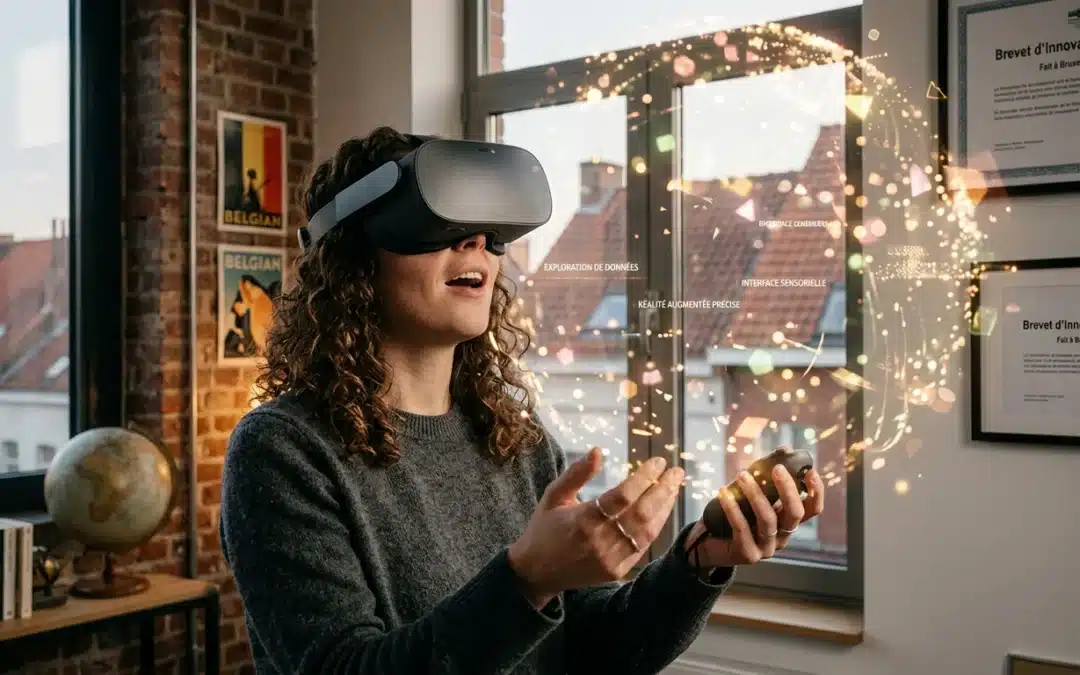
Immersive VR experiences in Brussels: the 2026 guide
read more
Summary: Virtual reality experiences plunge players into interactive digital...
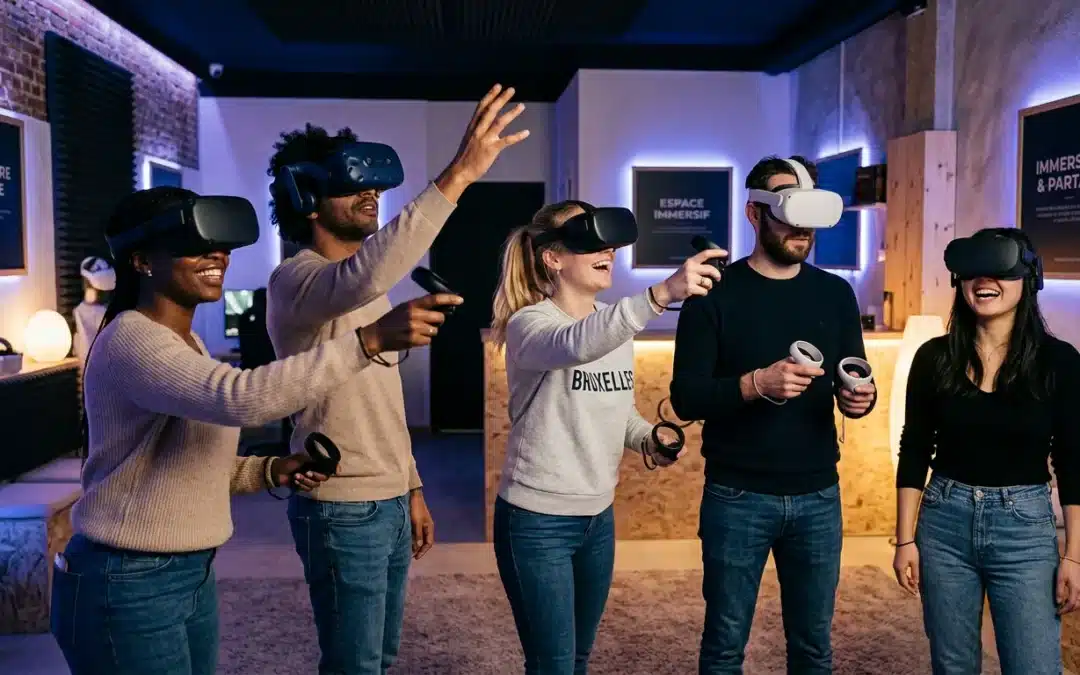
Summary: A virtual reality escape game combines the collaborative puzzles of...
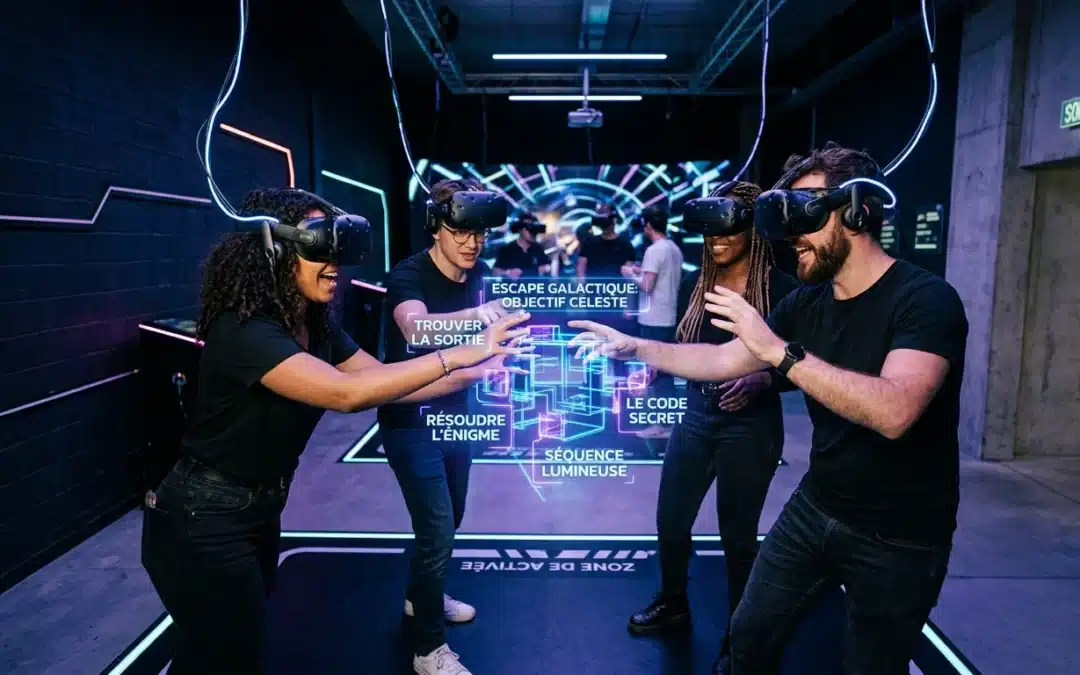
Summary: An escape room in Brussels is a group activity where you solve...
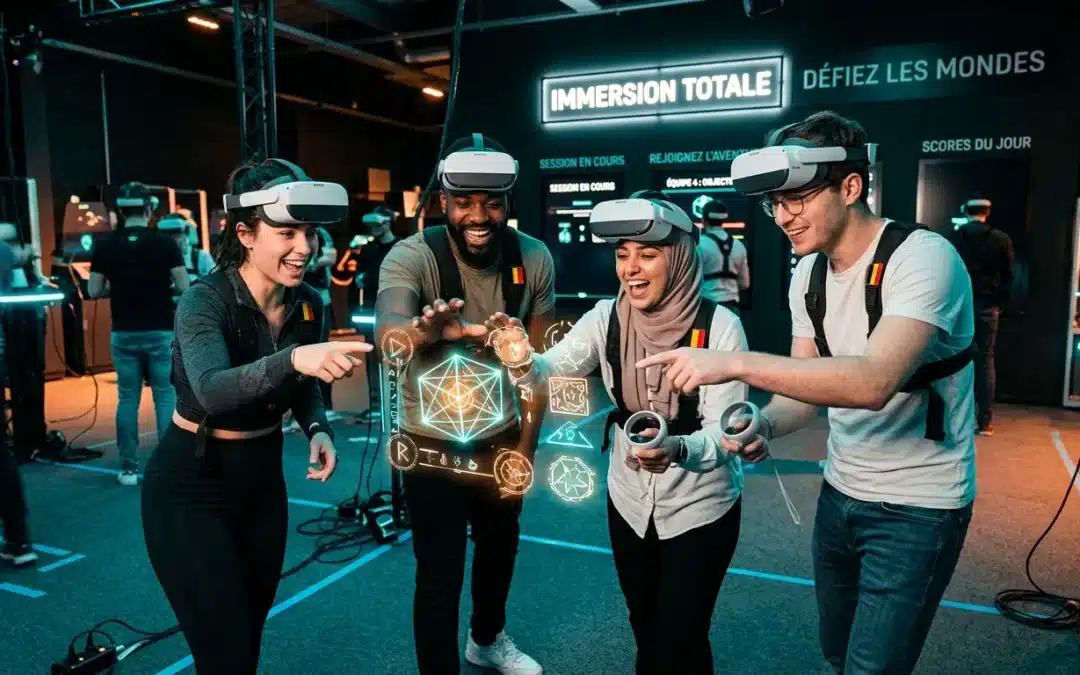
Summary: Virtual reality escape rooms combine collaborative puzzles with...
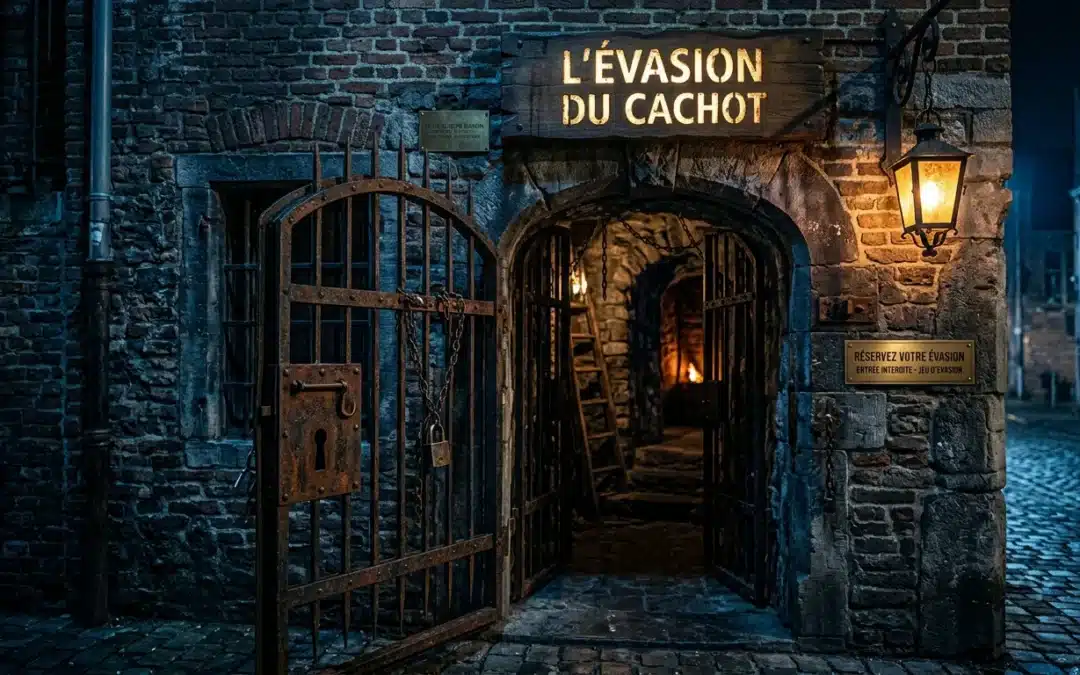
Summary: A prison-themed escape game locks you and your team in a prison set,...
Streaming and virtual reality go hand in hand, and BX1 is in the front row! In...
Summary: Virtual reality is now used for gaming, training, healthcare, collaborative work, and group events. Long reserved for entertainment, it now extends to many sectors thanks to more accessible headsets. In Brussels, it also offers immersive experiences with friends, family, or colleagues.
More than 171 million people were using a virtual reality headset worldwide in 2025. The technology has moved beyond the gadget aisle to become a practical tool in education, medicine, and leisure. You may be wondering what virtual reality can be used for in everyday life, beyond video games. The answer is much broader than you might imagine, and some of these experiences are available right near you, like with our wireless VR experience.
The headset isolates your senses and replaces your environment with an interactive digital world. This immersion changes the way we learn, heal, work, and entertain ourselves. According to Fortune Business Insights, the global VR market is estimated at $26.71 billion in 2026, proof that virtual reality applications are multiplying across almost every sector.
VR is based on a simple principle: simulate as many senses as possible to trick the brain. A headset equipped with high-resolution screens, motion sensors, and spatial audio places you at the heart of a three-dimensional environment. You’re no longer watching a scene—you’re in it.
This technological shift explains the rapid expansion of virtual reality uses. Recent standalone headsets no longer require a powerful computer or dedicated space, which has democratized access to these immersive experiences. In Brussels and elsewhere, VR reaches both individuals and businesses, from casual leisure to professional training.
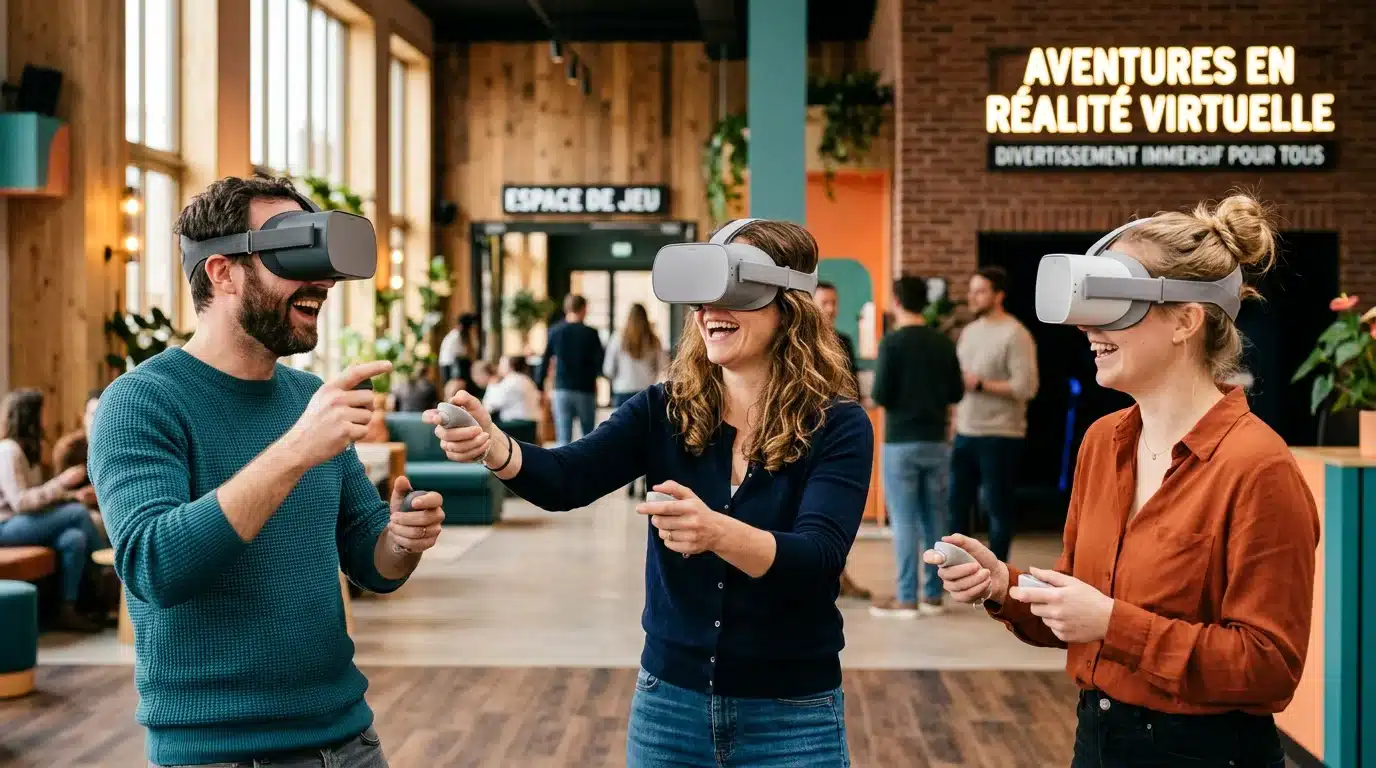
Entertainment remains the historical territory of virtual reality. Immersive games let you embody a character rather than control one, with sensations impossible to reproduce on a flat screen. Uses range from solo adventures to multiplayer arenas, including VR escape games.
This enthusiasm is measurable in the numbers. According to SQ Magazine, the number of VR users is expected to reach 216 million by the end of 2026, and the average session duration climbed to 52 minutes in 2025. Players are no longer just testing—they’re staying immersed longer. To explore the most entertaining formats, check out our top virtual reality escape rooms.
Imagine rehearsing a surgical operation without risk to a patient, or piloting a plane in a storm without leaving the ground. Immersive training is one of VR’s most powerful uses. It places the learner in a real situation, in a controlled environment that can be reproduced at will.
The benefits are documented. According to data compiled by DemandSage, 91% of companies have already adopted or plan to adopt VR or augmented reality, and training is among the most cited uses. Medicine, aviation, and architecture have long exploited this ability to train in complete safety. The experience lived in VR marks memory more than simple reading.
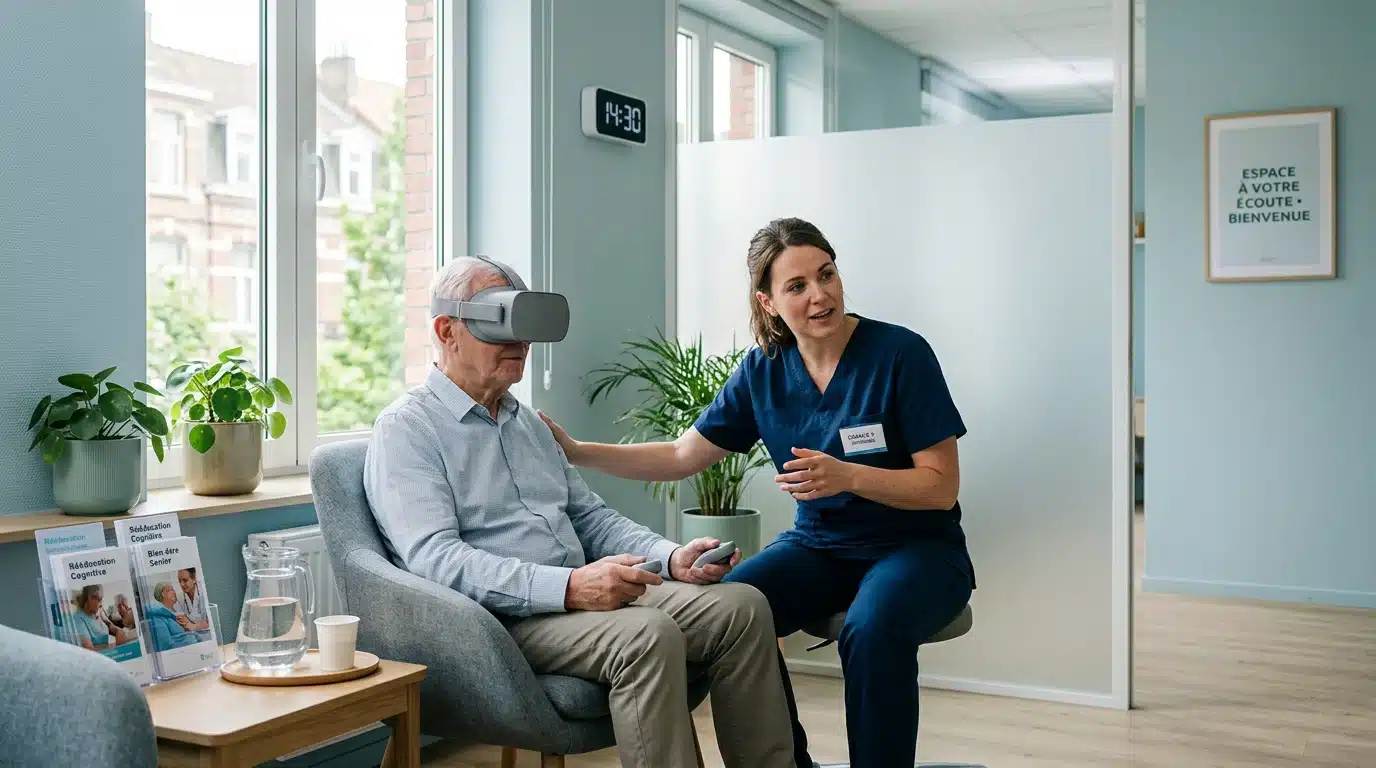
VR opens promising avenues in the medical field. It offers a non-pharmaceutical alternative to pain management: immersion diverts the patient’s attention and reduces the perception of chronic or acute pain. In rehabilitation, it transforms repetitive exercises into more motivating courses.
Psychology is also embracing it. Therapists recreate anxiety-inducing situations in a controlled setting to treat phobias and post-traumatic stress. This gradual exposure helps the patient overcome their fears without real danger. VR also serves to combat isolation for people with reduced mobility, offering them experiences otherwise inaccessible.
Companies use virtual reality well beyond training. Uses include recruitment, virtual site visits, product design, and collaborative meetings. A production manager can visualize a factory before its construction, a real estate agent can show a property remotely.
Collaborative VR allows multiple users to meet in the same virtual space, represented by avatars. According to forecasts from Mordor Intelligence, the global VR market could exceed $200 billion by 2029, driven notably by these professional uses. The technology reduces travel costs and makes certain processes more efficient and interactive.
This is where virtual reality takes on a strong social dimension. Birthdays, bachelor or bachelorette parties, corporate team building: group VR experiences create shared memories difficult to obtain with traditional leisure activities. Multiplayer arenas and escape rooms encourage cooperation and communication among participants.
We’ve built our offering around this collective use. Our formats accommodate 2 to 13 players depending on the activity, and our game selection aims to limit motion sickness so everyone can fully enjoy the immersion. To organize a fun outing near you, discover our VR escape games in Brussels.
Each use meets a distinct need. The table below summarizes the main application families and their primary benefit.
| Use | Target audience | Key benefit |
| Gaming and entertainment | Individuals, groups | Immersion and thrills |
| Professional training | Companies, schools | Risk-free learning |
| Healthcare and wellness | Patients, therapists | Pain and phobia management |
| Collaborative work | Remote teams | Cost and travel reduction |
| Group events (our specialty in Brussels) | Families, friends, companies | Over 25 games, formats for 2 to 13 players |
The uses are not mutually exclusive: the same VR center can combine leisure, team building, and technological discovery. Limitations remain, such as the cost of high-end equipment or visual fatigue during prolonged use, but they diminish with each generation of headsets.
The uses of virtual reality now cover an impressive spectrum: playing, learning, healing, working, and sharing moments together. This versatility explains the sector’s rapid growth and its adoption by both individuals and businesses. The best way to understand this technology is to experience it yourself, solo or in a group. In Brussels, the immersive leisure offering makes this first contact easy, whether for an outing with friends or a professional event.
You’ve discovered the diversity of immersive applications and want to experience them firsthand? Nothing beats direct experience, headset on, surrounded by your loved ones or colleagues. Our center in Brussels brings together these fun and collective uses in one place, suitable from age 7.
With over 25 games and activities, multiplayer arenas, VR escape rooms, and outdoor formats, we welcome families, groups of friends, bachelor parties, bachelorette parties, and corporate team building. Our game selection limits motion sickness for optimal comfort. Book now online and come explore our multiplayer Virtual Zone in Brussels.
No, gaming is just one use among many. VR also serves professional training, healthcare, remote collaboration, and group events. Its field of application expands each year to new sectors.
At our center, activities are accessible from age 7, with some experiences requiring 10 years or older. VR is therefore suitable for intergenerational family outings. You just need to adapt the choice of games to the participants’ ages.
Some people experience discomfort related to motion sickness, but this depends on the game and individual sensitivity. We select experiences designed to limit this discomfort. The majority of players enjoy the immersion without any issues.
It depends on the format chosen. Our activities accommodate 2 to 13 players depending on the experience, including the multiplayer arena, Virtual Zone, and VR escape rooms. It’s ideal for a birthday, bachelor party, bachelorette party, or team building.
Yes, modern headsets are compatible with most frames. For optimal comfort during long sessions, wearing contact lenses can be a good alternative. The important thing is to properly adjust the headset before starting.